Guide · Beans and ground coffee
The best coffee beans for bean-to-cup machines, from UK shops
Which beans suit a bean-to-cup grinder, what the makers warn against, and the supermarket bags that give the most coffee for your money, with prices checked 3 Oct 2026.
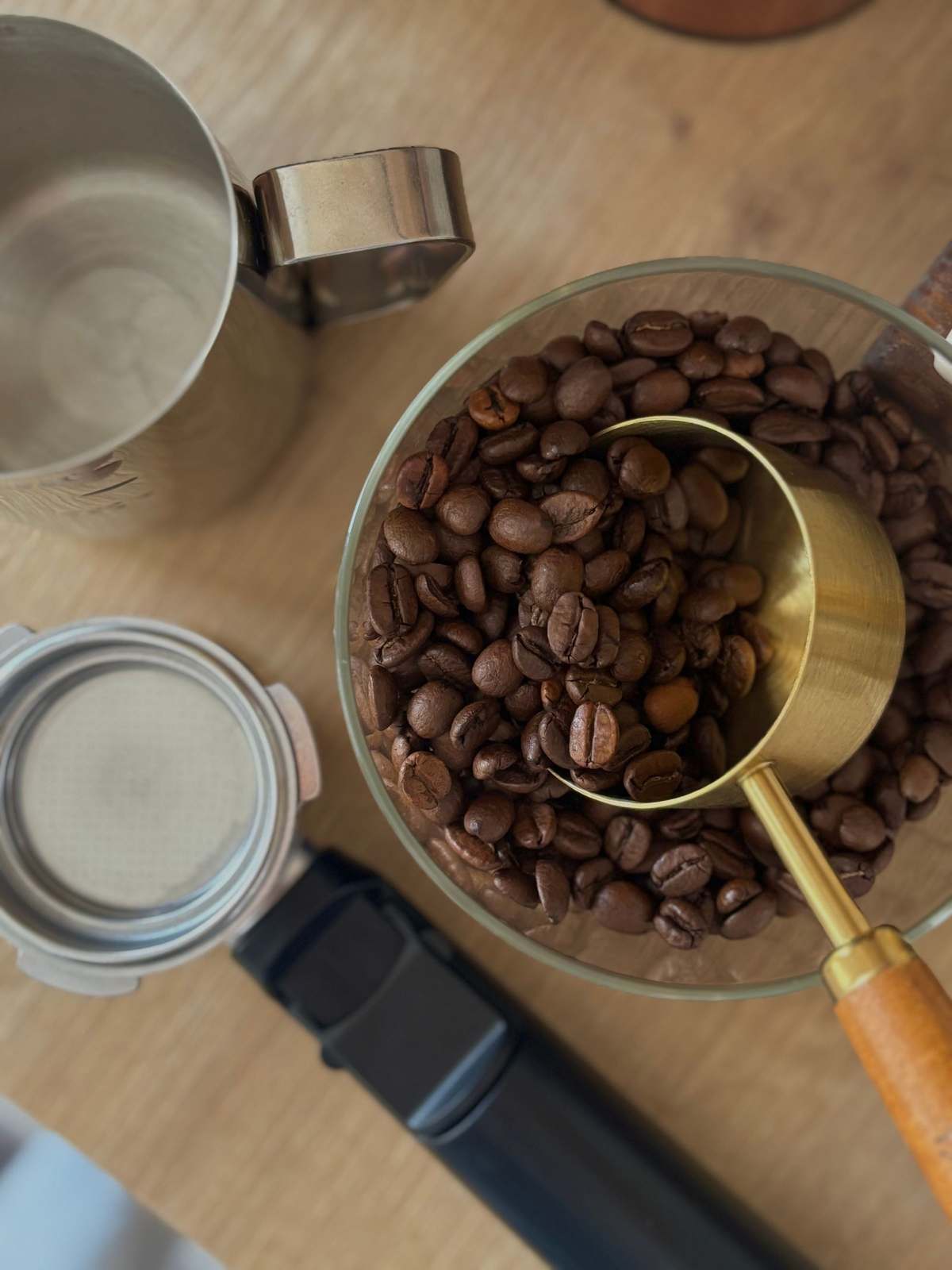
Looking for the best coffee beans for bean to cup machines UK shops actually stock? The good news is that you don’t need specialist beans. A bean-to-cup machine will grind almost any whole bean, and big supermarket bags are often the cheapest way to keep one fed. What matters is avoiding the few types makers warn against, and matching the bag to how you drink your coffee. We haven’t tested this in person. This guide is based on De’Longhi and Sage manuals and Morrisons’ online prices, checked 3 Oct 2026. Read how we compare.
What bean-to-cup grinders need
Makers are clear about one thing. De’Longhi’s Magnifica S manual says not to use caramelised or candied coffee beans, because they can stick to the grinder and damage it. That rules out sugar-coated and flavoured beans. We’d also steer clear of beans that look very glossy and oily, as oil can build up in the grinder and chute over time, though that’s our caution rather than a maker rule.
Beyond that:
- Freshness helps. Sage’s grinder manual recommends beans with a “roasted on” date, used 5 to 20 days after that date. Supermarket bags usually show a best-before date instead, which is fine for a bean-to-cup machine but tells you less.
- Adjust the grinder gently. De’Longhi says to turn its grinding dial only while the grinder is running, one click at a time, and that the change only shows after at least two cups.
- Store beans properly. Sage suggests a dark, cool, dry place, buying in small batches, and not storing beans in the hopper. Put them back in an airtight container.
Who it isn’t for: anyone who loves flavoured coffee. Add syrups to the cup instead of using flavoured beans.
The best coffee beans for bean to cup machines UK: our picks
Lowest price per kilo: Morrisons Espresso Blend Roasted Coffee Beans (1kg)
At £14.25 at Morrisons, checked 3 Oct 2026, this was the cheapest 1kg bag we found in Morrisons’ range, and the lowest price per kilo. If you make several milky drinks a day, a big own-brand bag keeps running costs down.
Who it isn’t for: anyone who wants origin details or a roast date on the bag.
Big-brand bag: Lavazza Qualità Rossa (1kg)
Check price at Morrisons. Lavazza is one of the best-known espresso brands in UK supermarkets, and the 1kg size suits a bean-to-cup hopper.
Who it isn’t for: anyone who wants a fixed price. Supermarket prices on this bag move often.
Everyday 1kg pick: Lavazza Crema e Gusto Classico (1kg)
£18.50 at Morrisons, checked 3 Oct 2026. A sensible middle option if you want a familiar Italian-style espresso blend without paying for a premium line.
Who it isn’t for: anyone who mostly drinks black coffee and wants something lighter or fruitier. Look at smaller specialty bags instead.
High-street brand pick: Costa Beans Intense Amazonian Blend (1kg)
£19.95 at Morrisons, checked 3 Oct 2026. If you like coffee-shop style milky drinks, this is the big Costa bag in supermarket aisles. The name tells you it’s pitched as an intense blend.
Who it isn’t for: anyone after the lowest cost per cup. The Morrisons own-brand bag was £5.70 cheaper per kilo.
Best for decaf: Lavazza Decaf Classico Coffee Beans (500g)
£12.50 at Morrisons, checked 3 Oct 2026 (£25.00 per kilo at Morrisons, checked 3 Oct 2026). Decaf beans cost more per kilo, but the 500g bag is a good size for a household where only one person drinks decaf. Morrisons also had Taylors Decaffe Coffee Beans (200g) at £5.75 at Morrisons, checked 3 Oct 2026.
Who it isn’t for: anyone wanting caffeine-free coffee. Decaf still contains a little caffeine.
Best for trying a brand first: Lavazza Oro (250g)
£6.50 at Morrisons, checked 3 Oct 2026. Before committing to a kilo, a 250g bag is a cheaper way to find out if you like a brand. Our Lavazza Qualità Oro beans review goes into more detail.
Who it isn’t for: heavy users. Small bags cost more per kilo: this one is £26.00 per kilo at Morrisons, checked 3 Oct 2026.
Black or milky: how to choose
- Mostly milky drinks (lattes, flat whites, cappuccinos): a blend sold as “espresso” or “intense” usually holds its own against milk. The 1kg espresso-style bags above are the obvious starting point.
- Mostly black coffee or long Americanos: try smaller bags first, and adjust the grind one click at a time as De’Longhi suggests.
- A mix of both: an everyday blend like Crema e Gusto Classico is a reasonable compromise.
If you switch between regular and decaf often, a machine with two hoppers or a pre-ground funnel makes life easier. Our bean-to-cup machines page explains the options.
Where to go next
For more beans across every budget, see coffee beans and our supermarket coffee ranges page. Choosing a machine? Start with our De’Longhi Magnifica Start review or Philips 2200 review, or compare bean-to-cup machines under £500.
FAQ
Can you use any coffee beans in a bean-to-cup machine? Most whole beans work. De’Longhi warns against caramelised or candied beans, which can stick in the grinder and damage it.
Are oily beans bad for bean-to-cup machines? Very oily beans can leave residue in the grinder over time. We’d choose beans with a drier look if you have the option.
Is it cheaper to buy 1kg bags? Usually. Morrisons’ own 1kg espresso blend was £14.25 at Morrisons, checked 3 Oct 2026, while a 250g Lavazza Oro bag works out at £26.00 per kilo at Morrisons, checked 3 Oct 2026.
How many beans should you put in the hopper? Only what you’ll use soon. Sage’s grinder manual says not to store beans in the hopper and to put them back in an airtight container.