Guide · Beans and ground coffee
How long do coffee beans last: best-before, roast date and opened bags
Coffee beans don't suddenly go off, but they do go flat. Here's how long they stay at their best sealed, opened, ground or frozen, and how to tell when they're past it.
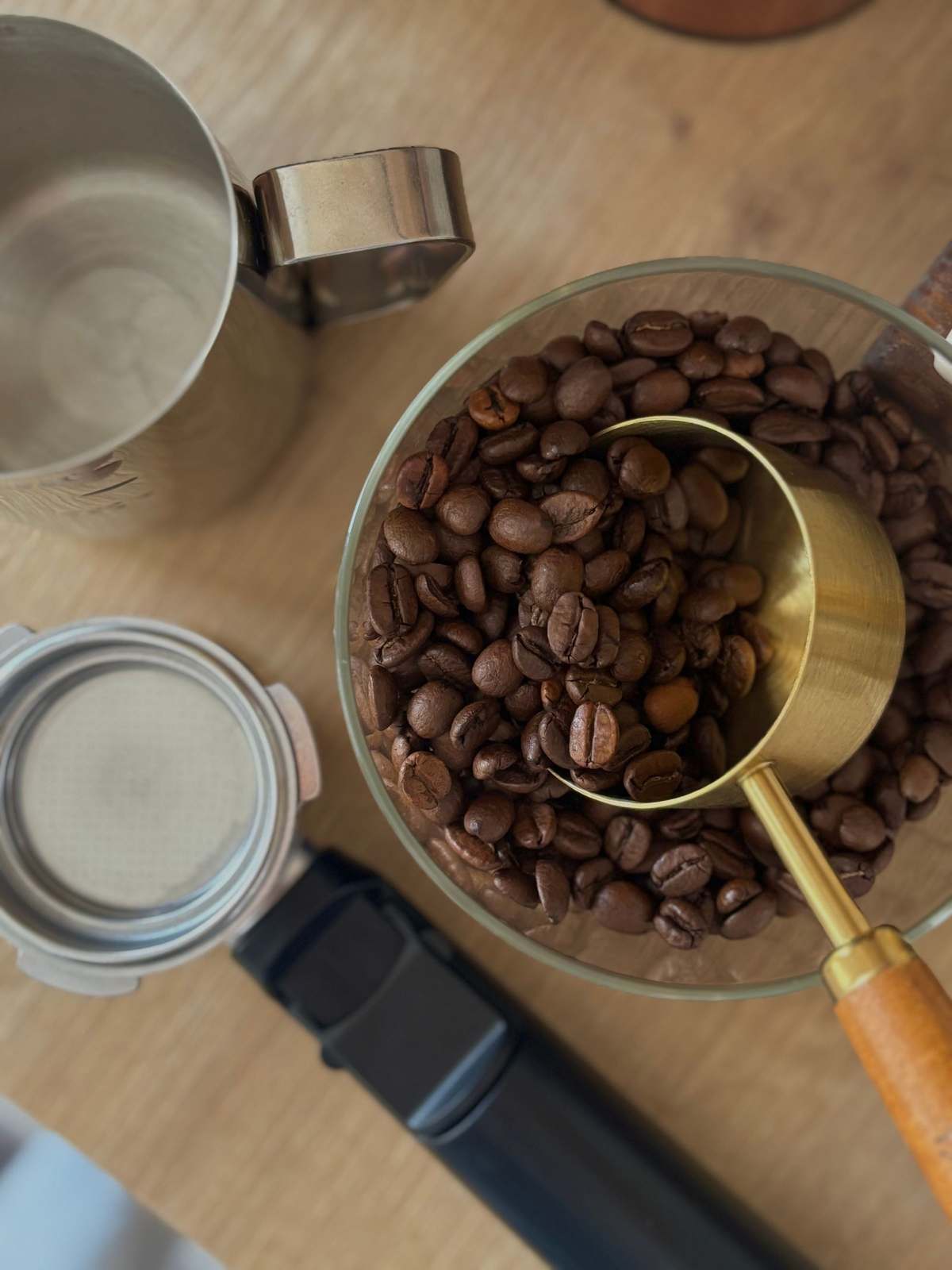
How long do coffee beans last? Longer than you might think if you only care about safety, and less than you’d hope if you care about flavour. Roasted coffee doesn’t suddenly go off; it slowly loses the aromas that make it worth drinking. Below we cover roast dates and best-before dates, sealed and opened bags, ground and frozen coffee, and the signs of stale beans. We haven’t tested this in person. The figures come from UK roasters and brands, plus the Food Standards Agency (FSA). Read how we compare.
How long do coffee beans last: the short answer
- Roast-dated beans: Union Hand-Roasted says best within 2 to 3 weeks of the roast date. RAVE Coffee and Extract Coffee Roasters suggest drinking within 3 months of roasting.
- Opened bag: RAVE suggests buying what you’ll use within 2 to 3 weeks of opening.
- Supermarket beans: a Taylors of Harrogate specification lists a 12-month shelf life.
- Ground coffee: Workshop Coffee says finish it within two weeks of grinding.
- Old beans: the FSA says food is usually safe after its best-before date, but may not be at its best.
Who it isn’t for: anyone after storage tips. See how to store coffee beans for containers, cupboards and freezing.
Roast date vs best-before date
A roast date tells you when the beans were roasted. RAVE’s knowledge base says to look for one, because without it you can’t tell how long a bag has sat on the shelf.
A best-before date is the brand’s estimate of how long the coffee keeps its quality. The FSA’s guidance on best before and use-by dates says best-before dates relate to quality and use-by dates to safety. Supermarket bags tend to carry long ones: the Taylors Rich Italian beans specification lists 12 months.
Very fresh isn’t always best. RAVE’s fridge guide suggests brewing from about a week after roasting, and Extract’s freshness guide says it rests espresso beans for a week or two so some carbon dioxide can escape.
Sealed vs opened bags
Sealed. Packaging makes a big difference. Workshop Coffee says nitrogen flushing keeps its whole beans fresh for up to 6 months unopened. Union’s packaging page says its 200g paper bags have no oxygen barrier, so it recommends brewing within 2 to 3 weeks of the roast date.
Opened. RAVE’s fridge guide says to buy only what you’ll use within 2 to 3 weeks of opening. Its knowledge base is more generous, saying a properly resealed bag stays at its best for up to 3 months, and beans are drinkable for up to a year after roasting, though flavours fade. We read the shorter figure as peak flavour and the longer ones as still-drinkable.
Whole beans vs ground coffee
Ground coffee stales much faster, because grinding exposes far more of it to air.
- Workshop’s pre-ground page advises finishing a bag within two weeks of its “Ground On” date.
- The retailer label for Taylors Rich Italian ground coffee says to keep it for up to 2 weeks once opened.
- Lavazza UK’s storage tips say to use ground coffee within a month.
Grinding just before brewing helps most. See our burr grinders under £100.
How long do frozen coffee beans last?
Lavazza UK says vacuum-sealed ground coffee keeps for up to two years in the freezer, or no more than about six months if it isn’t vacuum-sealed. Those figures are for ground coffee; we couldn’t find a UK roaster figure for frozen whole beans, so we haven’t given one.
Signs your coffee beans are stale
- Faint aroma. RAVE says beans lose flavour and aroma over time.
- Dull, bitter taste. Extract says coffee over 3 months old tastes more bitter than usual.
- Less crema. Extract says older coffee gives less crema on espresso.
- Fast-running shots. Extract says water runs through old coffee faster, under-extracting it.
- Stale, oily taste. Extract says surface oils on very dark roasts oxidise.
Older beans suit a cafetière better than an espresso machine. Extract suggests grinding them coarsely and brewing at 70g per litre.
Is it safe to drink old coffee beans?
Coffee carries a best-before date, not a use-by date. The FSA says food is usually safe after its best-before date but may not be of the same quality, and that you can use sight, smell or taste to decide.
On flavour, Extract says years-old coffee will taste dull and bitter. RAVE warns that moisture, such as fridge condensation, can in the worst cases cause mould, and looking for visible mould is one of the sight checks the FSA gives.
Downsides and things to know
- Sources disagree. Peak windows range from 2 to 3 weeks (Union) to 3 months (RAVE and Extract), so treat any figure as a guide.
- Packaging matters. Union says paper bags give no oxygen barrier, while Workshop’s nitrogen-flushed bags keep for months.
- Buy less, more often. RAVE’s storage guide suggests buying 1 to 2 weeks’ supply. Our guide to how much coffee per cup helps you work out what you use, and a coffee subscription brings smaller, regular deliveries.
FAQ
How long do coffee beans last once opened? RAVE suggests within 2 to 3 weeks of opening, though its FAQ says a well-resealed bag can stay at its best for up to 3 months.
How long do coffee beans last unopened? It depends on the packaging. Workshop says up to 6 months for its nitrogen-flushed bags; a Taylors specification lists 12 months.
Can you drink coffee past its best-before date? Usually, yes. The FSA says best-before dates are about quality, not safety. Expect a flatter cup.
Related
- How to store coffee beans: airtight, cool and dark (and the freezer question)
- M&S Collection Colombian beans review: Fairtrade everyday beans that are hard to price online
- Lavazza Qualità Oro beans review: a big, fairly priced bag of all-Arabica beans
- illy Classico beans review: a well-loved small tin, if you shop around