Comparison · Beans and ground coffee
Decaf vs regular coffee: what's actually different
How decaf is made, what 'decaffeinated' means on a UK label, how much caffeine regulators talk about, and where to find decaf in UK shops.
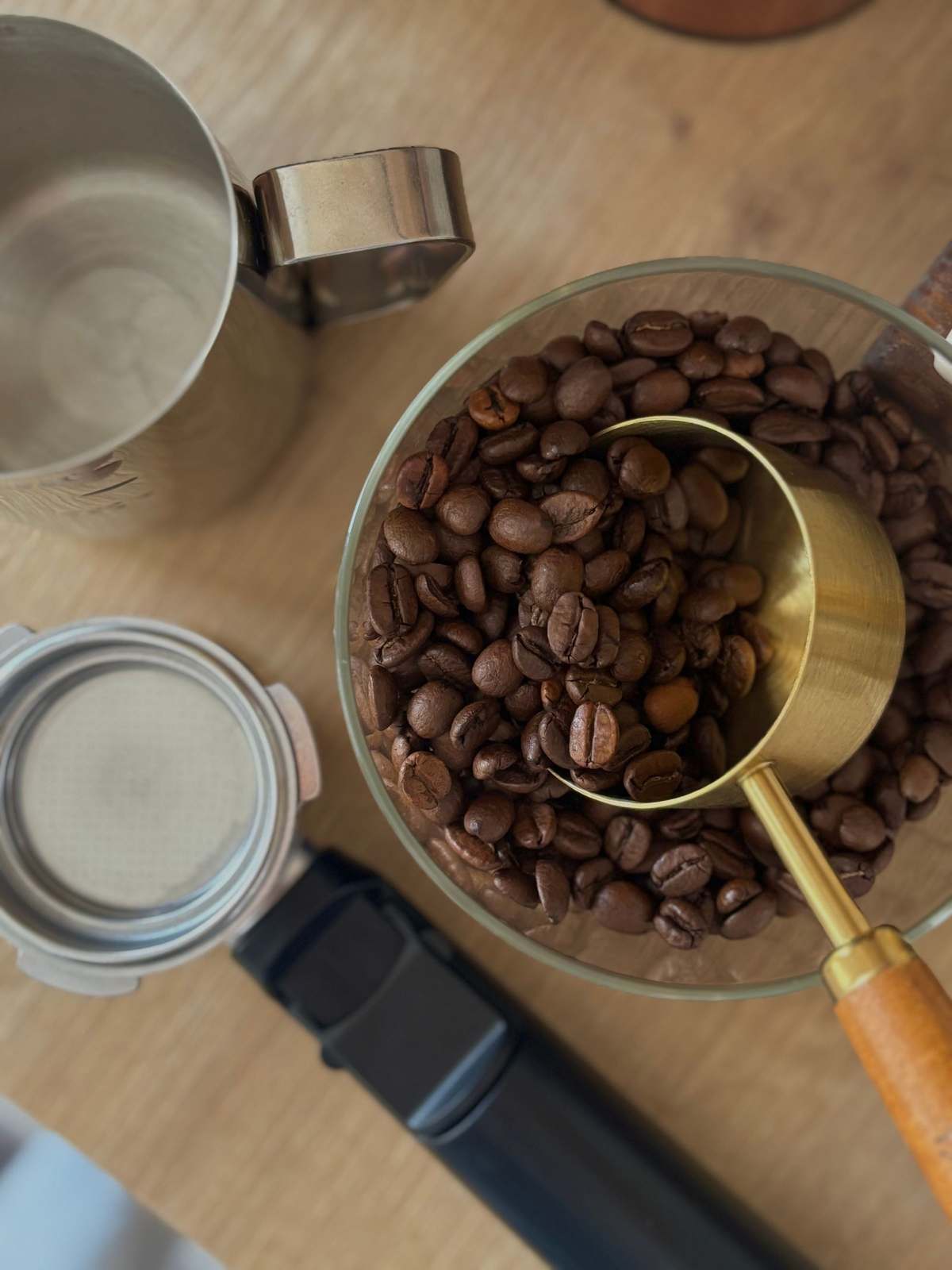
Decaf vs regular coffee comes down to one step: before roasting, decaf beans have most of their caffeine taken out. They’re the same species of bean, roasted and brewed the same way, so the main differences are caffeine content, a small effect on flavour, and how much choice you get on the shelf. We haven’t tested this in person. This guide uses UK legislation, NHS and EFSA guidance, a Royal Society of Chemistry feature on decaffeination, and UK shop listings checked 3 Oct 2026. We don’t give health advice. If caffeine is a medical question for you, ask your GP or midwife. Read how we compare.
How decaf is made
Decaffeination happens to green, unroasted coffee beans. The Royal Society of Chemistry’s feature on the subject describes three main families of method:
- Organic solvents. Dichloromethane (also called methylene chloride) and ethyl acetate are, the RSC says, the main solvents used for decaffeination worldwide. The beans are moistened so the solvent can reach the caffeine, then the solvent is removed and the beans are dried.
- Supercritical carbon dioxide. CO2 under high pressure and heat acts as a solvent. The RSC says it’s more expensive, favoured by some high-end brands, and strips out fewer flavour molecules than organic solvents because it’s very selective for caffeine.
- Water processes. The RSC calls the Swiss Water process the best-known water method. Swiss Water itself says its process never uses chlorinated solvents or esters.
Packs don’t always say which method was used. If it matters to you, look for wording such as “Swiss Water”, “CO2 decaffeinated” or “naturally decaffeinated”, or check the brand’s website.
Decaf vs regular coffee: what “decaffeinated” means on a UK label
Decaf isn’t caffeine-free. For instant coffee, the Coffee Extracts and Chicory Extracts (England) Regulations 2000 only allow the word “decaffeinated” when the remaining caffeine is no more than 0.30% of the coffee-based dry matter. We couldn’t find an equivalent current figure for roasted beans or ground coffee in the legislation we checked, so for those, read the pack or ask the brand. Our guide to how much caffeine is in decaf coffee goes into the labelling in more detail.
Who it isn’t for: anyone who needs to avoid caffeine completely. Decaf reduces caffeine a lot, but it doesn’t remove all of it.
Caffeine figures from the NHS and EFSA
We only quote official figures here:
- A cup of instant coffee: the NHS estimates about 100mg of caffeine, and says filter coffee and coffee from coffee shops can contain more.
- Pregnancy: the NHS says not to have more than 200mg of caffeine a day. On its own estimate of about 100mg a cup, that’s roughly two cups of instant coffee.
- Healthy adults: EFSA, the EU’s food safety authority, concluded that intakes of up to 400mg a day spread through the day don’t raise safety concerns for healthy adults in the general population, except pregnant women. It also said single doses of up to 200mg don’t raise concerns for that group.
- Sleep: EFSA noted that single doses of 100mg may affect sleep in some adults, particularly close to bedtime.
Remember caffeine also comes from tea, cola, chocolate and energy drinks. The NHS lists about 75mg in a cup of tea and 40mg in a can of cola.
Does decaf taste different?
It can, a little. Decaffeination is an extra process, and any method removes some flavour compounds along with the caffeine. The RSC says CO2 removes fewer flavour molecules than organic solvents, and Swiss Water claims its water method keeps decaf close to the original coffee. Beyond that, the roast and the beans themselves matter more than the decaf method. A good decaf espresso blend will usually taste better than a poor regular one.
Who it isn’t for: anyone who wants a wide choice of single-origin beans. Decaf ranges are smaller than regular ones in most shops.
Where to find decaf in UK shops
Decaf is easy to find in supermarkets in every format. From Morrisons on 3 Oct 2026:
-
Taylors Decaffé Ground Coffee (200g): £5.75 at Morrisons, checked 3 Oct 2026.
-
Lavazza Decaf Classico Ground Coffee (250g): £6.50 at Morrisons, checked 3 Oct 2026.
-
Morrisons The Best Colombian Decaf Coffee Beans (227g): £4.30 at Morrisons, checked 3 Oct 2026.
-
Nescafé Gold Blend Decaf (95g): £3.85 at Morrisons, checked 3 Oct 2026.
-
L’OR Espresso Ristretto Decaf pods (x10): £4.25 at Morrisons, checked 3 Oct 2026.
-
Nescafé Dolce Gusto Americano Decaffeinato (16 pods): £5.00 at Morrisons, checked 3 Oct 2026.
Where to go next
Our pick of the best decaf coffee and the best decaf coffee pods narrow the choice down. Dolce Gusto owners can go straight to the best decaf Dolce Gusto pods. Or browse our coffee beans and instant coffee pages.
FAQ
Is decaf coffee caffeine-free? No. It has much less caffeine than regular coffee, but some remains. UK rules for decaf instant allow up to 0.30% caffeine in the coffee’s dry matter.
How is caffeine removed from coffee? Green beans are treated with a solvent (such as dichloromethane or ethyl acetate), supercritical CO2 or a water process, then dried and roasted as normal.
Does decaf taste worse than regular coffee? Not necessarily. The process can remove a little flavour, but the beans and roast matter more.
Can you get decaf pods? Yes. Decaf pods are sold for Nespresso Original-compatible machines, Dolce Gusto and Tassimo in UK supermarkets.